
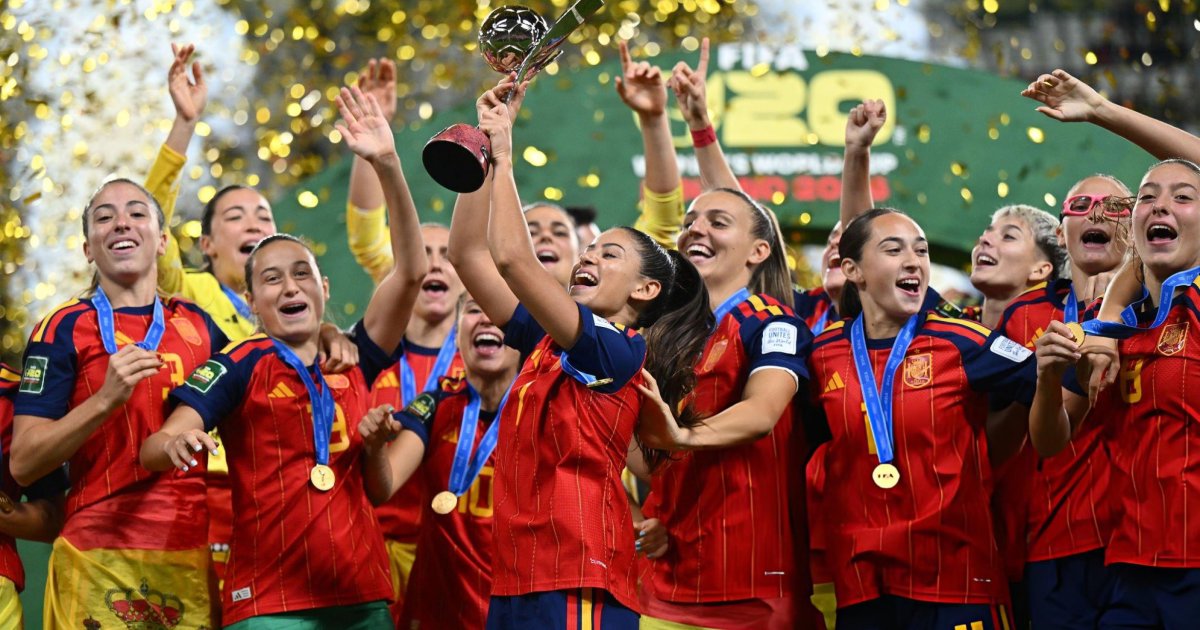
Spain have done it again. Another World Cup has been won. Another generation has lifted a trophy.
Once again, La Roja have provided evidence that their dominance across international football is no longer a coincidence.
Spain’s penalty shootout victory over Korea Republic on Sunday crowned them Under-20 Women’s World Cup champions.
This added another major trophy to an extraordinary run of success across the men’s and women’s game.
The latest triumph means Spain have now collected an incredible 17 world and European titles from under-17 level to the senior teams in the past five years, according to the supplied record.
Their dominance has spread across virtually every age group, with the senior men's and women's teams also sitting at the centre of Spain's remarkable rise.
The Trophies Keep Coming for Spain
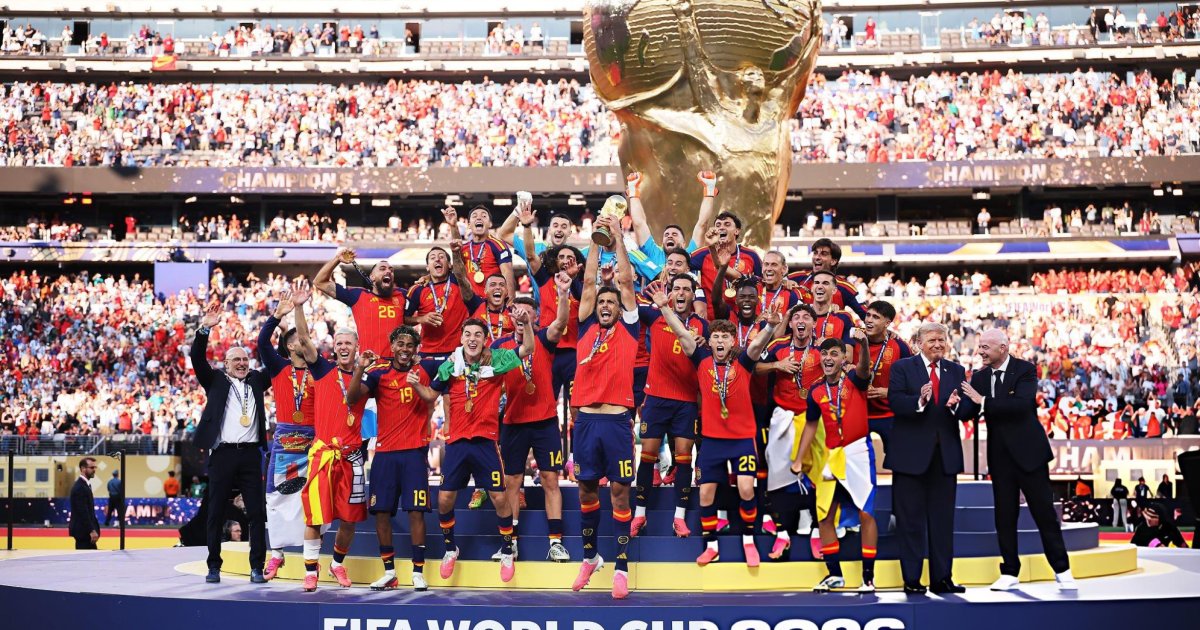
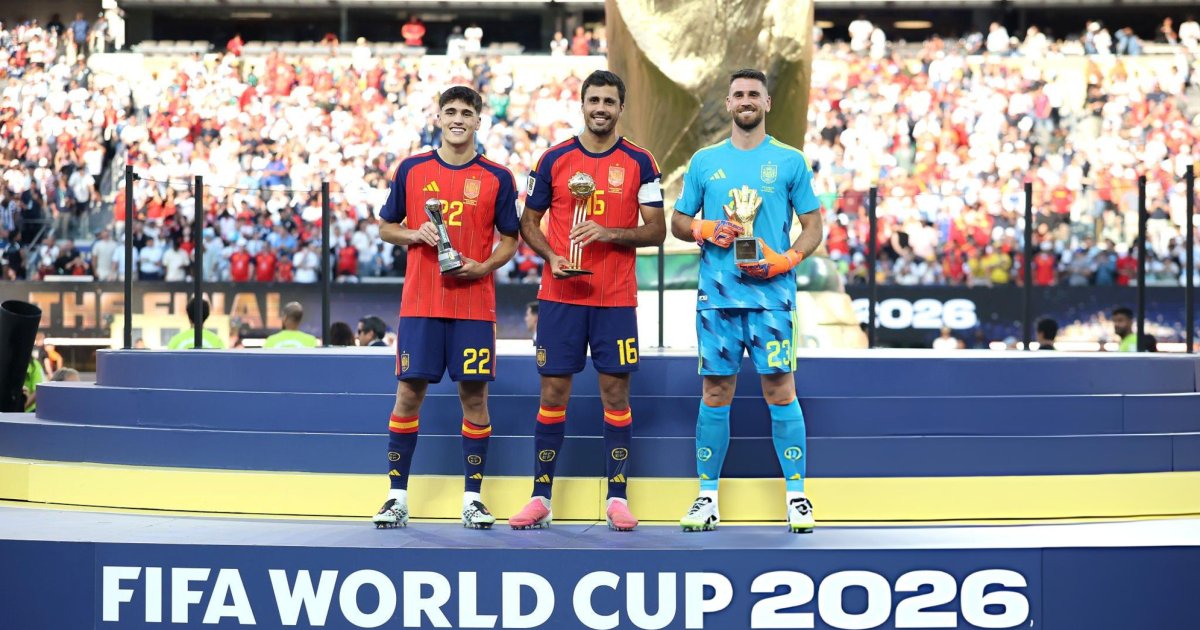
Spain’s senior men's team became world champions in the summer after defeating Argentina 1-0 in the World Cup final in New Jersey.
That achievement echoed their previous golden era.
Spain won Euro 2008 before lifting their first World Cup in 2010, and then added Euro 2012 to complete one of the greatest international runs in modern football.
The latest generation has now produced another extraordinary sequence.
Spain became European champions two years ago in Berlin before going all the way at the World Cup this summer.
On the women's side, Spain are the reigning world champions after defeating England in the 2023 Women's World Cup final in Sydney.
They also became the first country to simultaneously hold both the men's and women's World Cup titles.
The men won the Nations League in 2023 and Olympic gold in 2024, while the women followed up their World Cup success by winning consecutive Nations League titles in 2024 and 2025.
And now the Under-20 women have added another World Cup.
Spain's Winning Machine
The scale of Spain's success becomes clearer when the trophies are broken down.
Women's Football — 11 titles, 2022-2026
Senior
- 1 x Women's World Cup — 2023
- 2 x Nations League — 2024, 2025
Under-20
- 2 x U-20 Women's World Cup — 2022, 2026
Under-19
- 5 x UEFA Women's Under-19 European Championship — 2022, 2023, 2024, 2025, 2026
Under-17
- 1 x U-17 Women's World Cup — 2022
- 1 x UEFA Women's Under-17 European Championship — 2024
Men's Football — 5 titles, 2022-2026
Senior
- 1 x World Cup — 2026
- 1 x European Championship — 2024
- 1 x Nations League — 2023
Under-23
- 1 x Olympic gold — 2024
Under-19
- 1 x European Championship — 2026
The numbers tell a story that goes far beyond one successful senior team. Spain are producing champions continuously.
'It Was Risky to Appoint De La Fuente' - Spain
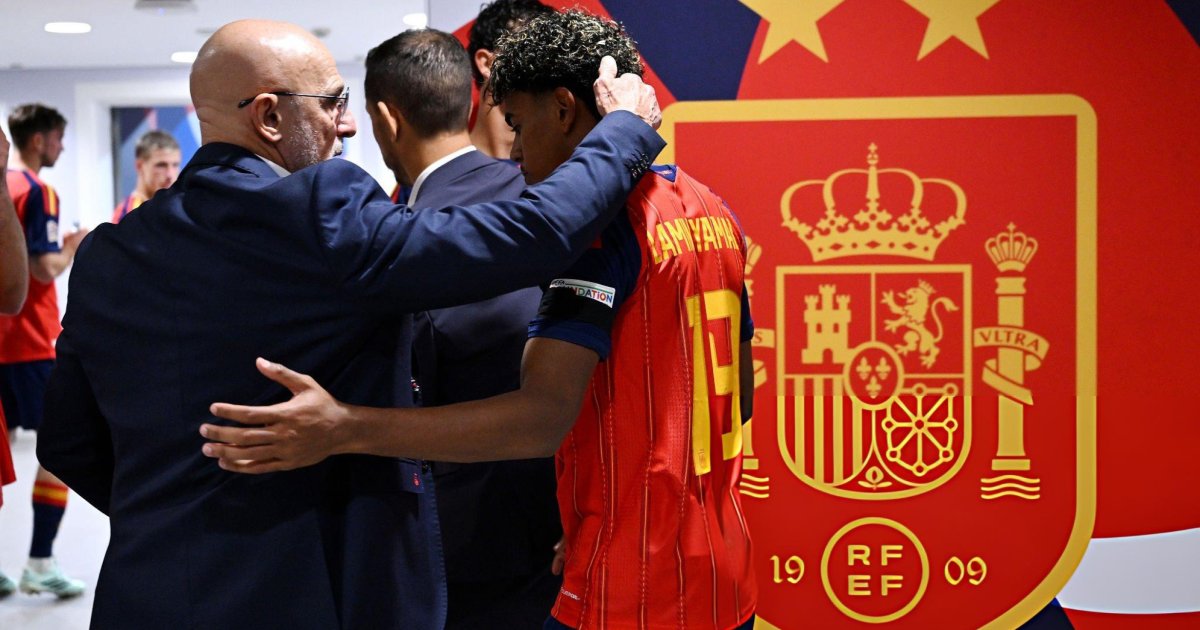
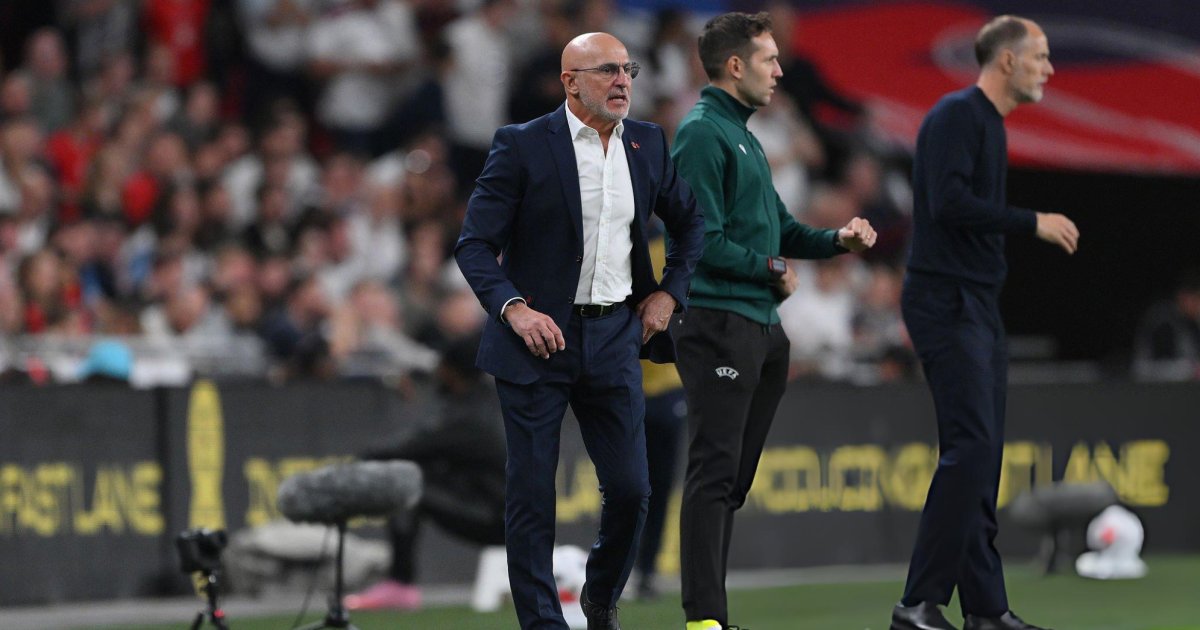
The men's transformation under Luis de la Fuente is perhaps one of the clearest examples.
When he was appointed in December 2022 following Spain's disappointing World Cup exit to Morocco, the decision was viewed as a gamble.
De la Fuente had extensive experience within Spain's youth system but had not managed one of Europe's elite clubs.
Yet he quickly turned that experience into senior success.
Within four years, Spain had won the Nations League, European Championship and World Cup under his leadership.
"They went with this guy [De La Fuente] who understood the style and the system," added Balague.
"It was a very risky decision. I don't think anyone thought he would be so successful."
De la Fuente's previous work with Spain's youth teams proved crucial.
He had managed the Under-19s, Under-21s and Olympic team, giving him familiarity with many of the players who would eventually become senior internationals.
A Culture That Refuses to Stop
De la Fuente has also built his approach around patience, respect and calmness.
At 65, he has repeatedly reminded his players that success does not mean the work is finished.
"Most of you are younger than me and you need to respect experience," said the 65-year-old.
"Once we finished the game, there were footballers who said, 'coach, now what else is there to win as we have won everything in all the categories'."
"We came to the conclusion that what remains is the next match in September because this team are relentless."
That mentality has now translated into an extraordinary run.
Spain's Nations League victory over England on Saturday extended their unbeaten run to 39 matches in all competitions, the longest such run by a European or South American men's national team in history.
The success of Spanish coaches has also spread into club football.
Despite Pep Guardiola leaving Manchester City after a decade filled with trophies, Spanish coaching influence remains prominent, with at least a quarter of the managers starting the 2026-27 Premier League season being Spanish.
Explaining Spain Women Football' Revolution
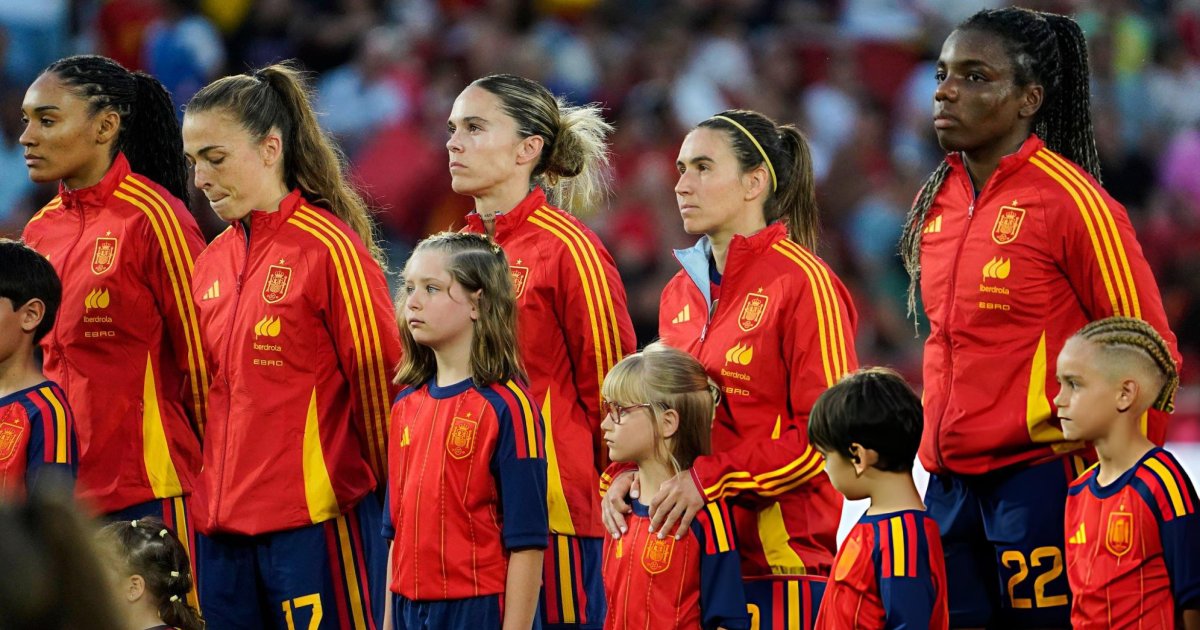
Spain's dominance is not restricted to the men's game.
The transformation of women's football has been just as significant.
Spain's senior women won their first Women's World Cup in 2023, defeating England in the final in Sydney.
It was only their third appearance at the tournament after making their debut in 2015.
They followed that achievement with consecutive Nations League triumphs in 2024 and 2025.
Former player and journalist Maria Garrido described just how dramatically the women's game has changed.
"The changes in women's football in Spain have been especially significant," former player Maria Garrido, who is now a journalist, told BBC Sport in 2024.
"Ten years ago, when I played for FC Barcelona, there was no La Masia [the famed academy at Barcelona] for girls."
"We covered our own transport costs, our parents brought us to training, and we didn't earn any money, but in the last five years, the situation has improved dramatically."
"There has been a substantial push to promote women's football, including the creation of more youth categories, better facilities and conditions, and the establishment of a dedicated football academy for girls."
"This transformation has not only revolutionized the sport but also elevated the respect for women's football in Spain."
That investment is now producing results at almost every age group.
Spain Is Building Present and Future Dominance
The most frightening part for Spain's rivals may be that the next generation is already arriving.
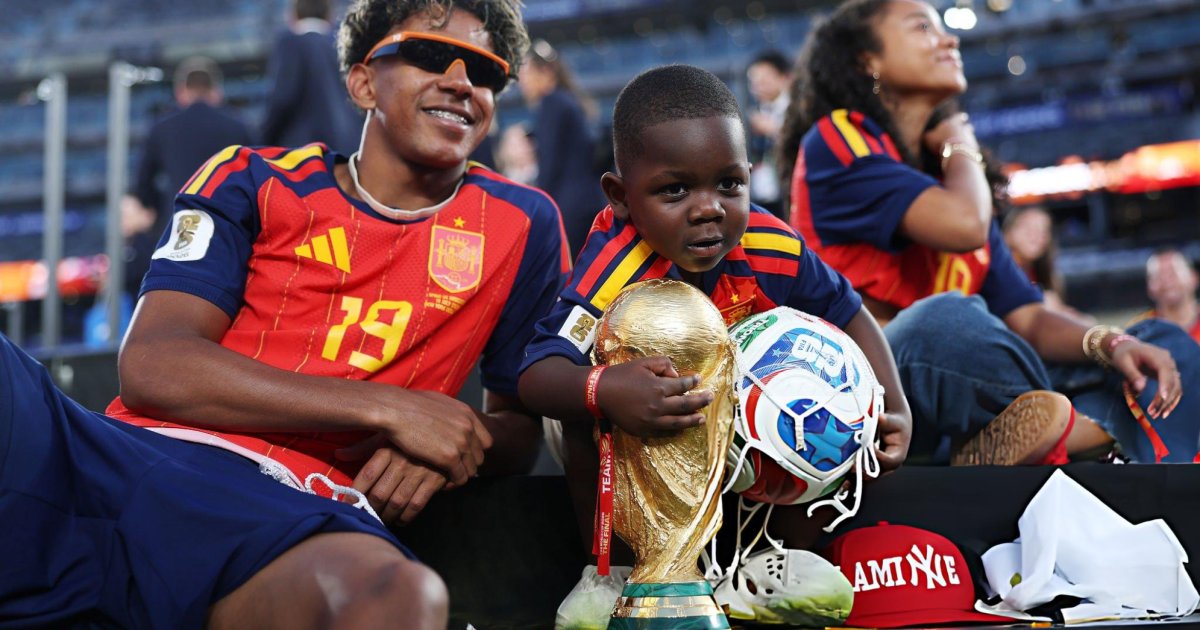
Lamine Yamal and Pau Cubarsi collected their first World Cup winners' medals at just 19.
Yamal became the third-youngest player ever to appear in a World Cup final, behind Brazil legend Pele in 1958 and Italy's Giuseppe Bergomi in 1982.
Cubarsi started the final at 19 years and 178 days, making Spain the first team to feature two teenagers in a single men's World Cup final.
The women's game has its own teenage stars.
Vicky Lopez is already a three-time Champions League winner with Barcelona at the age of 19, while Salma Paralluelo had earned more than 50 senior international appearances before turning 23.
The production line is clearly not slowing down. That may ultimately be the defining feature of Spain's extraordinary run.
The senior teams are winning, but so are the age-group sides.
The men's teams are producing champions. The women's teams are doing the same.
And behind them is a youth system that continues to feed talented players into teams that already know how Spain want to play.
From the Under-17s to the Under-20s, from European championships to World Cups, Spain's winning cycle keeps producing another trophy.
The latest one belongs to the Under-20 women, but judging by the talent already coming through, it may not be the last.
88.9 FM
AREA SUNSET SPORTS SHOW with Victor Okhani and Femi Olubiyi
Comments
0Be the first to comment on this article.