
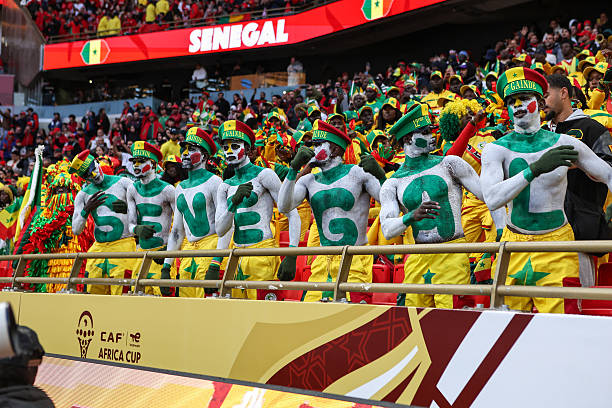
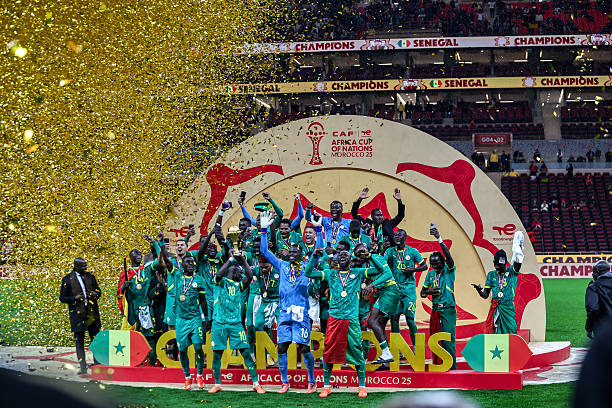
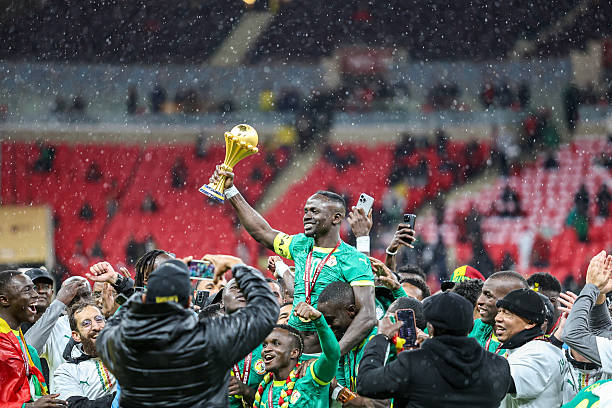
Senegal have been reinstated as 2025 Africa Cup of Nations champions after the Court of Arbitration for Sport (CAS) overturned the decision that stripped them of the title and awarded Morocco a 3-0 victory.
The ruling, delivered on Tuesday, November 24, follows months of legal disputes over the chaotic final in Morocco in January, which Senegal originally won 1-0 after extra time.
The Confederation of African Football (CAF) appeal board overturned that result in March, ruling that Senegal had forfeited the match after their players walked off the pitch in protest at a late penalty awarded to Morocco.
However, CAS has now upheld the Senegalese Football Federation’s appeal, set aside the CAF appeal board’s decision and reinstated the original result.
CAS FULL OFFICIAL STATEMENT
“The Court of Arbitration for Sport (CAS) has upheld the appeal by the Senegalese Football Federation (FSF) against the Confederation of African Football (CAF) and the the Royal Moroccan Football Federation (FRMF) concerning the final of the Africa Cup of Nations Morocco 2025 (AFCON 2025),” a CAS statement read.
“The decision rendered by the CAF appeal board is set aside and the decision by the CAF disciplinary board is reinstated."
"Consequently, the result obtained at the end of the AFCON 2025 final is confirmed (1-0 for Senegal).”
"The FSF appealed to CAS against a decision of the CAF Appeal Board declaring that the Senegal national team forfeited the AFCON 2025 final and recording the Moroccan national team as the winners."
"In their appeal, the FSF argued that the decision of the Referee, Mr Jean-Jacques Ngambo Ndala, to resume the match at the 109th minute (90+19) during the AFCON 2025 final and to allow it to be concluded with a sporting result could not be reviewed, pursuant to the 'field of play' doctrine."
"The FRMF argued, on the contrary, that the Referee's decision did not fall under the 'field of play' doctrine, as it cannot be applicable to the disciplinary consequences of the Senegalese team's behaviour."
"The FRMF alleged that, by leaving the pitch temporarily, the Senegalese team breached Articles 82 and 84 of the AFCON Regulations, which should have led the Referee to bring the match to an early conclusion."
"The FRMF also argued that the Referee erred in law and that his decision was arbitrary."
"After having examined the arguments raised by the Parties, the Arbitral Panel considered that the Referee's decision to resume the match or to stop it fell definitively within his sole authority."
"By blowing his whistle to restart play, the Referee considered that the conditions for resuming the match had been met - both teams were on the pitch again, and both expressed their willingness to resume."
"In the Panel's view, there is no doubt that the effects of the Referee's decision were limited to the pitch."
"As such, the Panel considers that the Referee's decision was covered by the 'field of play' doctrine."
"Since Articles 82 and 84 of the AFCON Regulations are intended solely to determine the outcome of a match when a team's conduct leads the referee to call off the game permanently, they are therefore not applicable in this case."
"In conclusion, the Panel considers that in resuming the match, the Referee did not err in law."
"The Panel acknowledged that the Referee had to make a decision in an atmosphere of extreme tension."
"However, these circumstances do not justify describing the decision as "arbitrary".
"On the contrary, the Referee's judgment did not appear to have been affected by factors external to the game."
Regarding the disciplinary aspects of the case, the Panel noted that the FSF, the FSF coach Mr. Pape Thiaw, and certain players had already been sanctioned by CAF following separate disciplinary proceedings."
"Consequently, the appeal by the FSF was upheld. This was a unanimous decision by the CAS Panel."
CAS Backs Referee’s Decision to Restart the Final
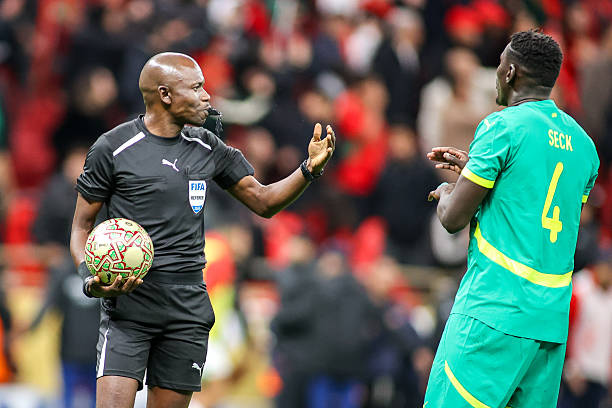
The dispute centred on referee Jean-Jacques Ndala’s decision to resume the match after Senegal’s players returned to the field.
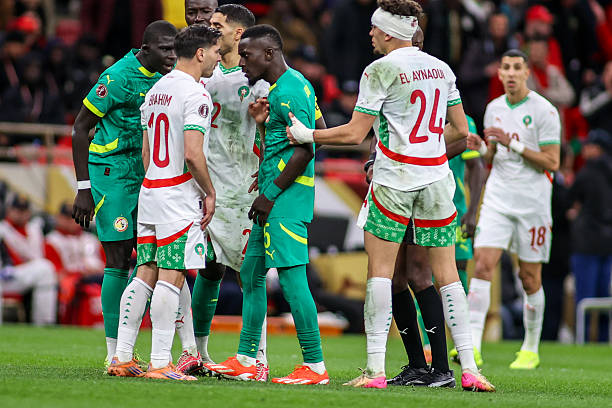
Senegal had walked off the pitch, following a controversial penalty awarded to Morocco in second-half stoppage time.
The protest caused a delay of more than 15 minutes before play resumed.
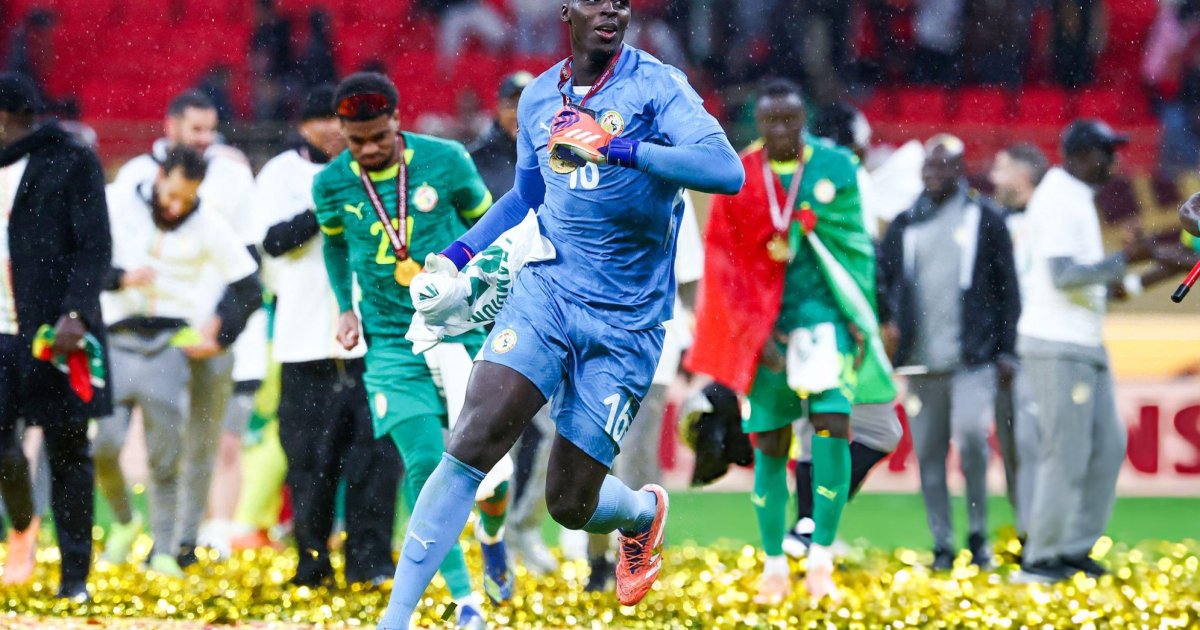
Morocco’s Brahim Diaz attempted a Panenka penalty, but Senegal goalkeeper Edouard Mendy saved it. The match went into extra time, where Pape Gueye scored the winning goal.
CAS ruled that Ndala’s decision to restart the game fell within his authority and was protected by the “field of play” doctrine.
The court said the referee had considered that the conditions for restarting had been met because both teams were back on the pitch and willing to continue.
It also ruled that the tournament regulations cited by CAF applied only when a team’s conduct led the referee to call off a match permanently.
“Ndala did not err in law” by allowing the game to resume, CAS said.
The court acknowledged that the referee had to make his decision in an atmosphere of extreme tension, but said the circumstances did not justify describing his decision as arbitrary.
It found no indication that his judgment had been affected by factors external to the game.
How the AFCON Final Controversy Unfolded
The final was played in January 2026, with Senegal beating host nation Morocco 1-0 after extra time.
The match was interrupted late in regulation time after Senegal had a goal disallowed and Morocco were awarded a penalty.
The key moments were:
- 90+2: Senegal had a goal disallowed.
- 90+8: Morocco were awarded a controversial penalty.
- 90+12: Senegal’s players left the pitch in protest.
- 90+20: Senegal’s players returned to the field.
- 90+24: Diaz’s Panenka penalty was saved by Mendy.
- 94 minutes into the match: Gueye scored in extra time to put Senegal ahead.
After the final, CAF’s appeal board ruled that Senegal had forfeited the match and awarded Morocco a 3-0 victory.
The board cited Article 82 of the AFCON regulations, which states that a team that
“refuses to play or leaves the ground before the regular end of the match without the authorisation of the referee, it shall be considered loser and shall be eliminated for good from the current competition.”
Article 84 states that a team found to have violated Article 82 would be permanently eliminated and lose the match 3-0.
Senegal challenged the decision at CAS, describing it as “a travesty.”
New Rule Introduced After the Controversy
In April, the International Football Association Board (IFAB), football’s law-making body, introduced a rule allowing players who leave the field in protest at a referee’s decision to be sent off.
The adoption of the rule is at the discretion of each competition organiser.
The next men’s AFCON is scheduled to begin in June and will be co-hosted by Kenya, Uganda and Tanzania.
What CAS Said About the Rules
In its full ruling, CAS said the Senegalese federation argued that the referee’s decision to restart the match at the 109th minute, or 90+19, could not be reviewed under the “field of play” doctrine.
Morocco’s federation argued that the doctrine did not apply to the disciplinary consequences of Senegal’s conduct.
It said Senegal had breached Articles 82 and 84 by temporarily leaving the pitch, and that the referee should have ended the match.
The Moroccan federation also argued that the referee had erred in law and acted arbitrarily.
CAS rejected that argument, concluding that the referee’s decision to resume or stop the match was within his sole authority.
The panel said Articles 82 and 84 were intended to determine a match’s outcome only when a team’s conduct caused the referee to call off the game permanently.
The court also noted that Senegal, coach Pape Thiaw and certain players had already been sanctioned by CAF in separate disciplinary proceedings.
CAS said the appeal was upheld unanimously by its three-member panel.
88.9 FM
SPORTS WRAP with Breezy, Victor Okhani and Femi
Comments
0Be the first to comment on this article.