
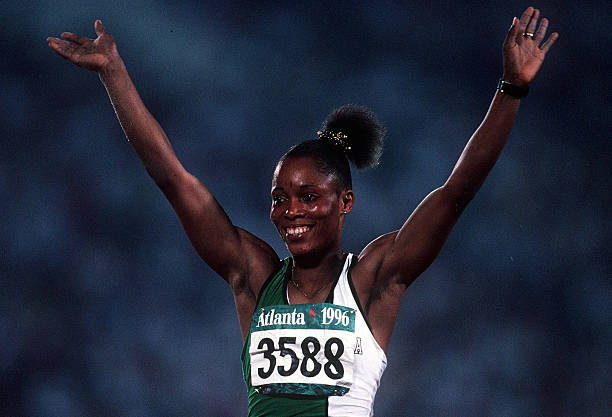
Nigeria’s former Olympic long jump champion, Chioma Ajunwa-Opara has been cleared to return to athletics after the Athletics Integrity Unit (AIU) lifted the lifetime ban imposed on her in 2002.
Ajunwa, who won Nigeria’s first individual Olympic gold medal at the 1996 Atlanta Games, welcomed the decision and said she holds no grudges against anyone over the episode.
“I’m happy now. What can I do? I am happy."
"I thank God."
“Whoever that I have got, no matter what you think you are doing, I thank God for everything. I’m not angry with anybody.”
The AIU’s decision, contained in a memorandum dated November 18, 2026, followed a review request submitted on Ajunwa’s behalf on August 28.
The ruling restores her eligibility to participate in athletics, including
- competition,
- coaching,
- administration and
- officiating.
However, it does not overturn the original anti-doping violation or remove it from her record.
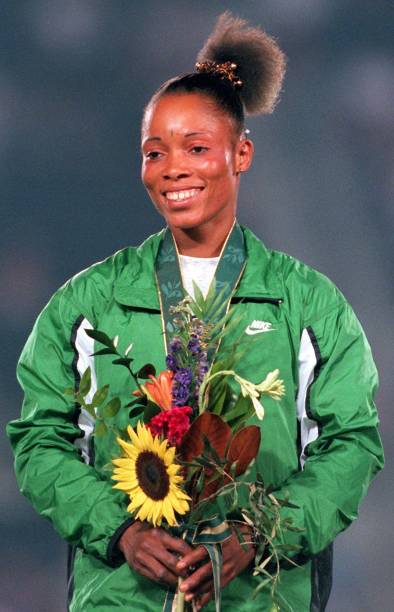
Why was Chioma Ajunwa Banned and How the Lifetime Ban was Lifted
The AIU reviewed Ajunwa’s case under the legal principle of lex mitior, which allows an individual to benefit from more lenient rules introduced after an offence was committed.
Under revised World Athletics Anti-Doping Rules that took effect on January 1, 2026, a second violation of the type recorded against Ajunwa carries an eight-year suspension rather than an automatic lifetime ban.
Having spent more than 23 years under suspension, her period of ineligibility was reduced to the time already served.
Ajunwa was banned after a urine sample collected at the Athens Grand Prix Tsiklitiria on June 10, 2002, returned an adverse analytical finding for nandrolone, an anabolic steroid.
The Athletics Federation of Nigeria (AFN) imposed the sanction, which was subsequently recorded by the International Association of Athletics Federations (IAAF), now World Athletics, on February 3, 2003.
No appeal was filed against the decision.
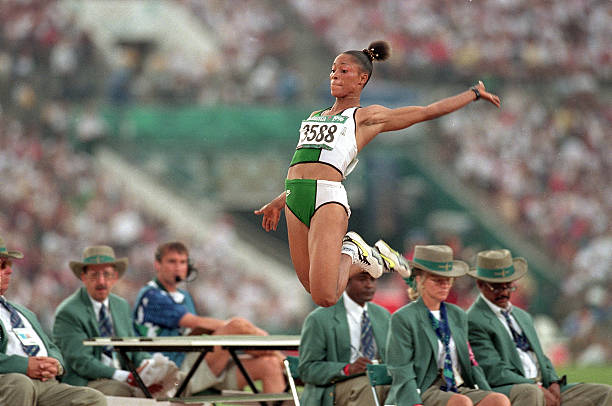
AFN wants Ajunwa to Guide Younger Athletes
AFN president Chief Tonobok Okowa welcomed the lifting of the ban and said Ajunwa could use her experience to help younger athletes avoid doping violations.
“We are happy about it, and we hope she will use her experience to guide our younger athletes."
"She can always advise them."
"When we are organizing seminars, she can come and speak to them about her experience and explain that it is not a good path to follow,” Okowa said.
The AFN president said the federation’s priority was to improve athletes’ understanding of anti-doping regulations and reduce Nigeria’s exposure to doping violations.
“All we have to do is try to get out of Category A, and the only way we can achieve that is for our athletes to compete cleanly, without using any prohibited substances,” he said.
Okowa disclosed that Nigeria was ranked around 10th globally in the relevant anti-doping classification, with about 11 reported cases.
He said the country must avoid a further deterioration of its standing.
The federation, he added, would continue its anti-doping seminars and awareness programmes, particularly for athletes who may not fully understand the implications of consuming prohibited substances.
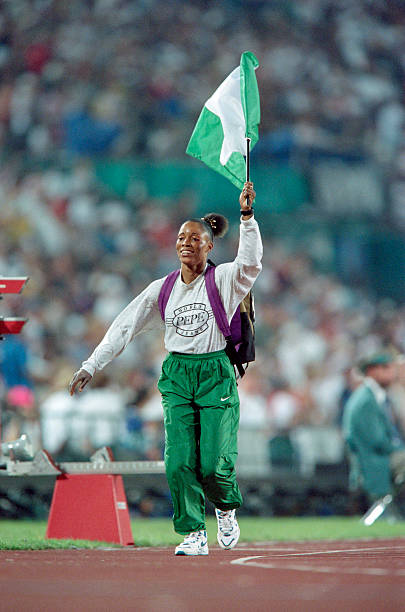
‘Ignorance is not an Excuse’ - Okowa
Okowa also urged athletes who have previously been suspended to use their experiences to warn others against making similar mistakes.
He acknowledged that some athletes may lack sufficient knowledge of substances they consume, especially when taking supplements or medication without proper guidance.
“For those who are already suspended, whatever they can do to advise athletes who are still competing and help them avoid such situations would be good for us,” he added.
However, he cautioned athletes against assuming that a lack of knowledge would automatically excuse an anti-doping violation.
“Not all athletes are naive. I don’t believe ignorance is an excuse."
"When you are wrong, you are wrong. When you are fair, you are in for it,” he said.
The Nigeria Anti-Doping Centre (NADC), the country’s national anti-doping organisation, is responsible for implementing anti-doping programmes, including testing, education and results management in line with international standards.
88.9 FM
AREA SUNSET SPORTS SHOW with Victor Okhani and Femi Olubiyi
Comments
0Be the first to comment on this article.